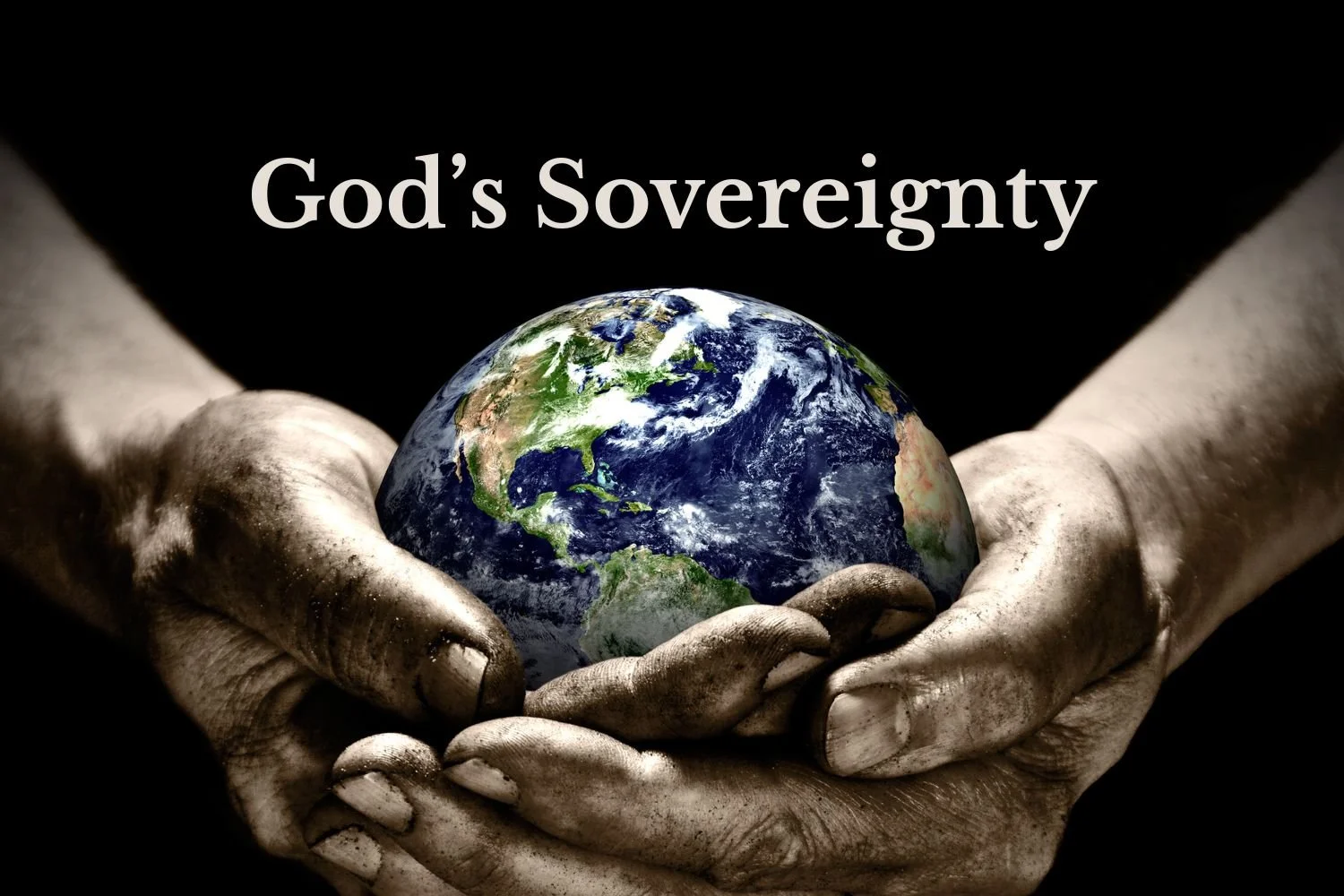
God’s Sovereignty
Sometimes there are topics within the realm of theology that can cause a great deal of debate among Christians and theologians. This blog post is about one of those topics.
As we continue the attributes of God blog series, we will dive into God’s attribute of sovereignty.
God’s sovereignty is one of those things that can cause great comfort for a lot of Christians, but sometimes it has also caused a great deal of confusion and doubts about how to reconcile this truth with His other attributes.
However, as we look at Scripture and keep an honest and open mind, I truly believe that the sovereignty of God will lead us to trust Him more and experience Him more in our lives each and every day.
GOD’S SOVEREIGNTY
God is sovereign. We hear that word often in Christian circles, but what does it mean?
Well, first, let’s look at the way various theologians have taken Scripture and tried to define it.
Paul Enns describes God’s sovereignty this way:
God is the supreme ruler and authority. He ordains whatever comes to pass, and His divine purpose is always accomplished. (Paul Enns, Moody Handbook of Theology)
A.W. Tozer articulates it slightly differently:
God's sovereignty is the attribute by which he rules his entire creation, and to be sovereign God must be all knowing, all powerful, and absolutely free. (A. W. Tozer, The Knowledge of The Holy)
And furthermore, Charles Ryrie goes even further by saying:
Sovereignty means principal, chief, supreme. It speaks first of position (God is the chief Being in the universe), then of power (God is supreme in power in the universe). God has a plan, which is all-inclusive, which he controls, which includes but does not involve him in evil, which ultimately is for the praise of his glory.. (Charles Ryrie, Basic Theology)
God’s sovereignty means that He is the supreme authority and ruler of all things.
What do the Scriptures declare specifically about God’s sovereignty?
In Isaiah, God Himself reveals that He is sovereign:
"I am God, and there is no other; I am God, and there is none like me, declaring the end from the beginning and from ancient times things not yet done, saying, 'My counsel shall stand, and I will accomplish all my purpose.'" (Isaiah 46:9-10)
Daniel writes about God’s sovereignty in this way:
God "does according to his will among the host of heaven and among the inhabitants of the earth; and none can stay his hand" (Daniel 4:35)
David mentions it in Psalm 103, by declaring:
"The Lord has established his throne in the heavens, and his kingdom rules over all" (Ps 103:19)
Job talks about God’s sovereignty in terms of His purposes:
"I know that you can do all things, and that no purpose of yours can be thwarted" (Job 42:2)
And the apostle Paul in the New Testament, writes this in Ephesians and Colossians:
God "works all things according to the counsel of his will" (Ephesians 1:11)
…all things have been created through him and for him. He is before all things, and in him all things hold together. (Colossians 1:16-17)
As you can see, God has revealed to us through Scripture that He is sovereign. He is the chief supreme Being in the universe. God is ruling and reigning, directing things in according to His plans, and nothing will ever be able to stop those purposes from being carried out.
One of the ways that I think might be helpful to see what we are talking about here is to look at God’s sovereignty in conjunction with the attributes we’ve discussed in previous blog posts.
So, let’s think of the sovereignty of God in this way:
OMNISCIENCE + OMNISAPIENCE + OMNIPOTENCE = SOVEREIGNTY
God knows all things actual and possible, past, present, and future in one eternal act (omniscience)
God is all-wise (omnisapience). He knows how to take that knowledge and use it to make the best possible plans for all of His creation for all-time.
Through God’s omniscience and omnisapience, God has made plans as the supreme authority and ruler of all things.
But it’s His omnipotence that allows Him to carry those plans out. He is all-powerful to be able to rule and reign in such a way that His all-wise plan for His creation is not thwarted in any way.
What God wills, He will carry out to completion.
When we talk about God’s sovereign plan and carrying it out to completion, one of the places we see that most clearly is through Jesus. Look at what Peter says in Acts 2:23…
This man was handed over to you by God’s deliberate plan and foreknowledge; and you, with the help of wicked men, put him to death by nailing him to the cross. (Acts 2:23)
Peter talks about “God’s deliberate plan,” and His “foreknowledge.” He is saying that even though people were making choices for evil to crucify Jesus, God was sitting above as the sovereign ruler of all things, using this evil to carry out His ultimate plan to rescue His creation from sin.
And really as we look at what Peter is saying here, it even addresses one of 2 major points of contention and confusion for people when it comes to God’s sovereignty.
HUMAN CHOICE AND GOD’S SOVEREIGNTY
Does God’s sovereignty mean that human beings don’t have the freedom to choose?
Is God controlling everything we do in such a way that He’s like a puppeteer?
No.
Scripture talks about how we have the freedom to choose and that there is a responsibility we carry from the choices that we make.
For example, when we look at the opening pages of the Bible and the story of creation, we see the freedom of Adam and Eve to choose.
God puts two trees in the Garden (the tree of life and the tree of knowledge of good and evil), and He tells them not to eat of the tree of knowledge of good and evil.
Well, the very fact that He has to tell them not to do that means that they had a choice in the matter! Why else would He have to tell them not to do something if they didn’t have the freedom to make the choice to eat from that tree?
What God is after is our heart. He loves us with all of His heart (John 3:16), and His desire is that we love Him with all of our heart. For that to happen, it requires choice.
You can’t force genuine love. A dictator can force someone to be his wife, and she could go through all of the actions of obedience to him; however, she wouldn’t be doing those from a place of genuine love but of fear because he is in ultimate power.
There can be an outward obedience to someone without an actual heart of love for them.
That is not what God is after. His desire is an intimate, loving relationship with us, and the only way that happens is if we have the freedom to choose love.
John 3:16 says that “God so loved the world that He gave His one and only Son, that whoever believes in Him will not perish but have eternal life.”
“Whoever believes,” means that some will make the choice not to believe and love Him.
What I am saying when it comes to human choice and God’s sovereignty is that both things are true. Humans have the freedom to choose, but God is also sovereign and in control of all things.
Now how that happens is what people have been fighting about for centuries (most recently over the last 500-600 years through what is known as Calvinism and Arminianism). Both Calvinism and Arminianism agree that God is sovereign but believe differently about how He carries out His sovereignty.
I am not going to try and solve that debate, but I do appreciate what Chip Ingram says in his book, The Real God about this…
Some extreme forms of Calvinism, though well-intentioned, guard God's sovereignty so protectively that it virtually eliminates human responsibility. It makes God a cosmic puppeteer and denies that we have any real choices. That's unbiblical. At the other end of the spectrum are extreme forms of Arminianism. Also out of good intention, these attempts to guard free will and human responsibilities so protectively that it creates a God who is up in heaven biting his nails, hoping everything will work out, waiting for our decision so he can figure out what to do. Both extremes violate scripture. Scripture teaches a tension between the two. God is absolutely sovereign. No plan of his can be thwarted, and he is in control of all people, events, and history. The scripture also teaches that we are free, moral agents who make decisions, and those decisions can impact things for eternity. How those two truths go together is a mystery. Either extreme will land you in a theological ditch. Like two telephone poles that hold their wires and tension, at one end you're responsible and at the other, God is sovereign. One brings great comfort, the other great responsibility. (Chip Ingram, The Real God)
When it comes to human choice and God’s sovereignty, Scripture talks about both things being true. We must hold both of those things in tension.
SOVEREIGNTY AND EVIL
If God is sovereign and in control of all things, then why is there evil in the world? And does that mean that God causes evil and suffering?
Well, let’s look at what Scripture says about this in a couple of different places.
The apostle John declares this in the opening chapter of his gospel:
… God is light; in him there is no darkness at all. (John 1:5)
And David writes this in Psalm 5:
"For you are not a God who delights in wickedness. Evil may not dwell with you." (Psalm 5:4)
God has no evil in Him. He cannot do evil things.
Also, as previously discussed in another blog post, one of God’s attributes is His goodness, and another one we’ll be talking about later this series is His attribute of love.
God is good, and God is love. He can only do things that are good and loving.
Therefore, when we see evil in our world, we go back to choice.
Satan was an angel of light but made a choice to rebel against God.
Adam and Eve had a choice to trust in God’s provision and continue drawing life from the Tree of Life, but they chose to disobey God and brought sin into this world.
However, when we consider this along with God’s attribute of sovereignty, we must realize that He allowed for those sinful choices and for that evil to happen even as a part of His good plan for His creation.
Here’s another way to look at what I am saying:
How do you truly come to know God’s goodness if you haven’t experienced evil and suffering?
How do you know God can calm the storm if you’ve never been in the storm?
Have you ever thought about how you have it better than Adam and Eve?
I get that they were in the Garden of Eden. I understand that there was no sin in the world, and there was absolute perfection.
But think about this: How did they really know God’s goodness and love for them without knowing or being involved with evil in the world?
You see evil in this world. You know it’s broken. You know that you are broken. You’ve done evil things. You and I know that we don’t deserve anything from a holy and perfect God.
Yet we get to experience what Paul writes about in Rom. 5:8:
But God demonstrates his own love for us in this: While we were still sinners, Christ died for us. (Romans 5:8)
See, we get to live on the other side of the cross, where we see that the God of the universe left the glory and riches of heaven to come to earth to suffer and die for us who are sinners and were deserving only of His wrath.
And now that we get to experience His goodness and love in our lives through His salvation, we can appreciate it even more than Adam and Eve could. They didn’t get to experience knowing that their Creator would sacrifice Himself for them.
Talk about goodness and love.
Here is what I am saying:
God isn’t the author of evil but He allows for it in His sovereign plan, and He even uses it to accomplish His good and loving purposes.
One of the places we see that in Scripture is in Genesis with Joseph. He was thrown in a pit to die, taken into slavery, falsely accused and thrown into jail, but eventually he was made 2nd in command of all of Egypt. As he encountered his brothers after all of this, we see that Joseph said this in Genesis 50:20:
You intended to harm me, but God intended it for good to accomplish what is now being done, the saving of many lives. (Genesis 50:20)
Joseph’s brothers made the free choice to do something to him to harm him, but the sovereign Lord was working even in and through their harmful choices to accomplish good for Joseph and for the Israelite nation (whom the Messiah would come through). So, all of that suffering and evil in Joseph’s life was even used by God in His plan to rescue all of humanity!
Therefore, when we talk about God’s sovereignty, it still allows for our choices in some way and also brings purpose in and through the evil and suffering in this world. We won’t always see it and understand it, but that goes back to God’s attributes of omniscience and omnisapience.
Only God knows all things actual and possible and has the wisdom to know how to work in and through all situations to bring about His goodness and love. Therefore, we trust in Him.
GOD’S SOVEREIGNTY AND THE APPLICATION FOR OUR LIVES
Sometimes as we look around this world, all we can see is chaos. We see it in our world, political system, economy, wars being fought, relational struggles, and on and on.
It can seem like evil is winning. It can make us feel like we should be worried, fearful, or anxious.
But when we understand that God is sovereign and that He is actively involved in moving things along in this world for our good and His glory in some way, then we can be comforted by that.
We can trust that even when we don’t see it, God is at work!
When we understand God’s attribute of sovereignty, the application for our lives is to trust Him with our lives and what He is doing over time in our world.