God’s Sovereignty in Suffering
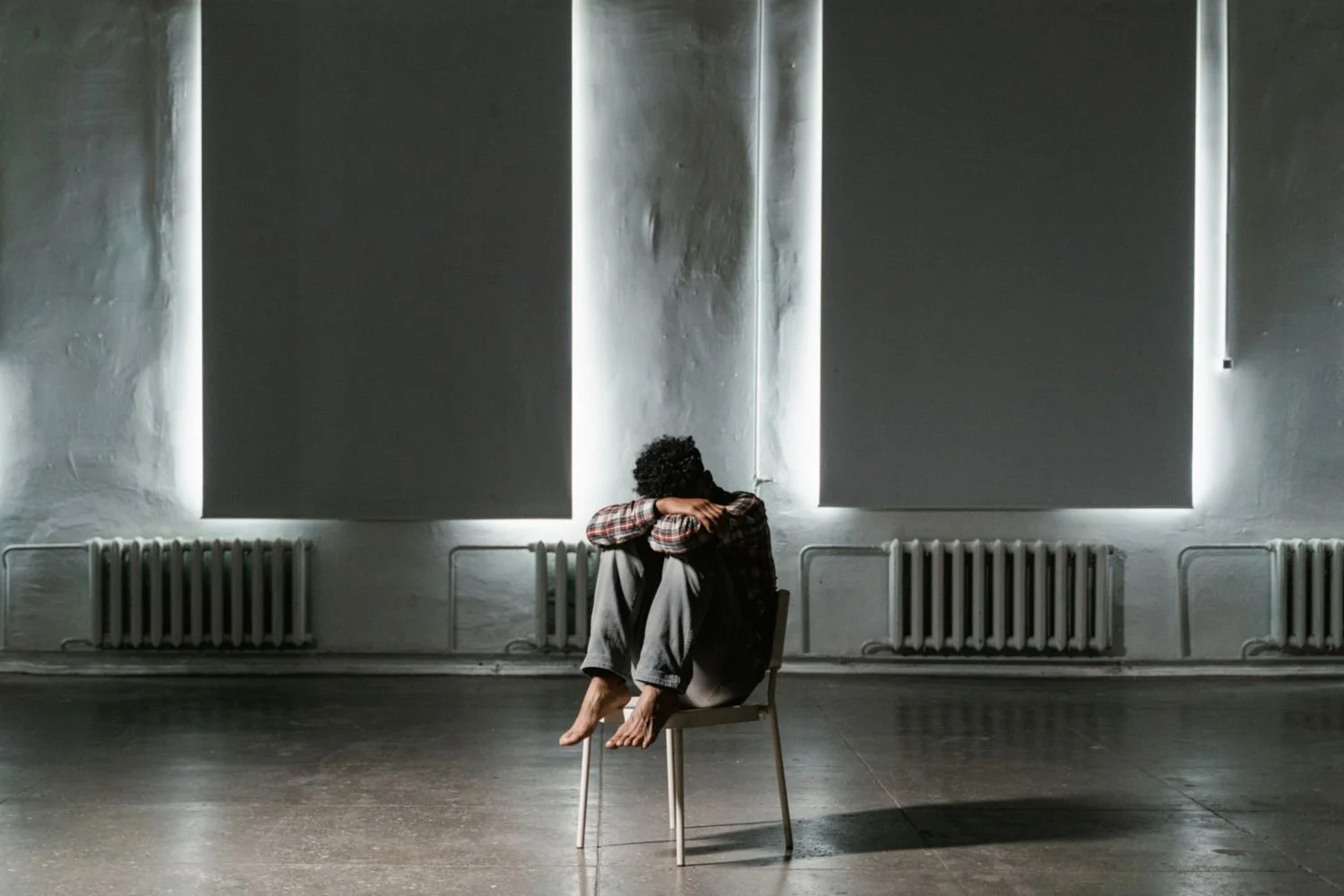
Why do bad things happen to good people? Why does it seem like the wicked prosper while the faithful suffer?
These aren't new questions. They've been asked for generations — and we see them play out vividly in Acts 12, where the early church faces one of its darkest moments yet.
THE DARKEST HOUR
It was about this time that King Herod arrested some who belonged to the church, intending to persecute them. He had James, the brother of John, put to death with the sword. (Acts 12:1-2)
Let that sink in for a moment. James wasn't just any disciple. He was part of Jesus' inner circle — one of only three who witnessed the Transfiguration, the raising of Jairus' daughter, and Jesus' agony in Gethsemane. And now he's dead, executed by the sword.
This is a devastating blow to the early church. But it gets worse.
When he saw that this met with approval among the Jews, he proceeded to seize Peter also. This happened during the Festival of Unleavened Bread. After arresting him, he put him in prison, handing him over to be guarded by four squads of four soldiers each. Herod intended to bring him out for public trial after the Passover. So Peter was kept in prison, but the church was earnestly praying to God for him. (Acts 12:3-5)
Picture the scene. One of Jesus' closest followers has just been executed. Another sits in a cell, guarded around the clock by soldiers from the most powerful army on earth, awaiting his own execution. Every six hours, a fresh squad rotates in — two soldiers chained directly to Peter, two more stationed at the door.
Power. Authority. Weapons. All arrayed against a small, praying church.
Who do you think wins that fight?
SLEEPING IN THE STORM
The night before Herod was to bring him to trial, Peter was sleeping between two soldiers, bound with two chains, and sentries stood guard at the entrance. (Acts 12:6)
Peter knows James is dead. He knows he's scheduled for trial — and execution — in the morning. And what is he doing the night before?
Sleeping!
How is that even possible? Only one explanation makes sense: the peace of Christ. Peter wasn't facing this moment alone. He had a settled confidence that even if the worst happened, God remained good, just, and in control.
That kind of peace isn't found in circumstances. It's found in a Person.
THE RESCUE NO ONE SAW COMING
Suddenly an angel of the Lord appeared and a light shone in the cell. He struck Peter on the side and woke him up. "Quick, get up!" he said, and the chains fell off Peter's wrists... They passed the first and second guards and came to the iron gate leading to the city. It opened for them by itself, and they went through it. (Acts 12:7-10)
No army stormed the prison. No weapons were drawn. No one even noticed Peter was gone until morning. Chains simply fell away. An iron gate simply opened.
This is what it looks like when an omnipotent God decides to act. What seems impossible to us costs Him nothing at all.
Jesus said it plainly: "I will build my church, and the gates of Hades will not overcome it" (Matthew 16:18). Not Herod. Not Rome. Not the combined might of the ancient world's most powerful empire. Nothing can stand against the King who built the church in the first place.
THE TYRANT'S END
Luke doesn't stop with Peter's rescue. He wants us to see the rest of the story.
On the appointed day Herod, wearing his royal robes, sat on his throne and delivered a public address to the people. They shouted, "This is the voice of a god, not of a man." Immediately, because Herod did not give praise to God, an angel of the Lord struck him down, and he was eaten by worms and died. But the word of God continued to spread and flourish. (Acts 12:21-24)
The man who wielded absolute power, who executed one believer and imprisoned another, who cut off entire cities' food supplies to bend them to his will — that man dies in humiliating fashion, struck down for accepting worship that belonged to God alone.
Meanwhile, the gospel keeps advancing.
The commentator John Stott captured the reversal well: the chapter opens with James dead, Peter imprisoned, and Herod triumphant — and it closes with Herod dead, Peter free, and the word of God triumphing.
WHAT THIS MEANS FOR YOU TODAY
So what do we take from all of this?
God is sovereignly in control — of your life, of His church, and of this world.
He is at work even through the schemes of those who oppose Him, even through circumstances that make no sense to us. Nothing and no one can derail His plans.
When things look bleak. When it feels like evil is winning. When your life feels like it's falling apart — remember Acts 12. Remember that one of Jesus' closest friends died while another was miraculously spared, and both outcomes served God's purposes.
We won't always understand why. Jesus allowed James to die and rescued Peter, and Scripture never explains why one and not the other. But we don't have to understand it to trust it.
Here's why: God is omniscient. He is also infinitely wise. He holds every piece of information about how every possible outcome would unfold, and we hold almost none of it. If Scripture is right that He is good — and it is — then we can trust that His perfect knowledge, paired with His perfect wisdom, has produced the best possible plan, even when we can't see it from His vantage point.
Whatever you're walking through today, you can rest in the sovereign Lord who is building His church, and against whom the gates of Hades will never prevail.
He is working — for your good, and for His glory.